

A recipe post already tells the reader what to buy: the pan, the thermometer, the flour. That gives affiliate links a natural place in a recipe post, as long as the links serve the recipe. This guide shows where they fit, which programs suit food content and which rules apply, from the official pages read on 18 November 2026. The general rules for every niche are in our affiliate marketing guide for bloggers (opens in a new tab), and the Pinterest side sits in our guide to Pinterest income routes for bloggers (opens in a new tab).
Where affiliate links fit in a recipe post
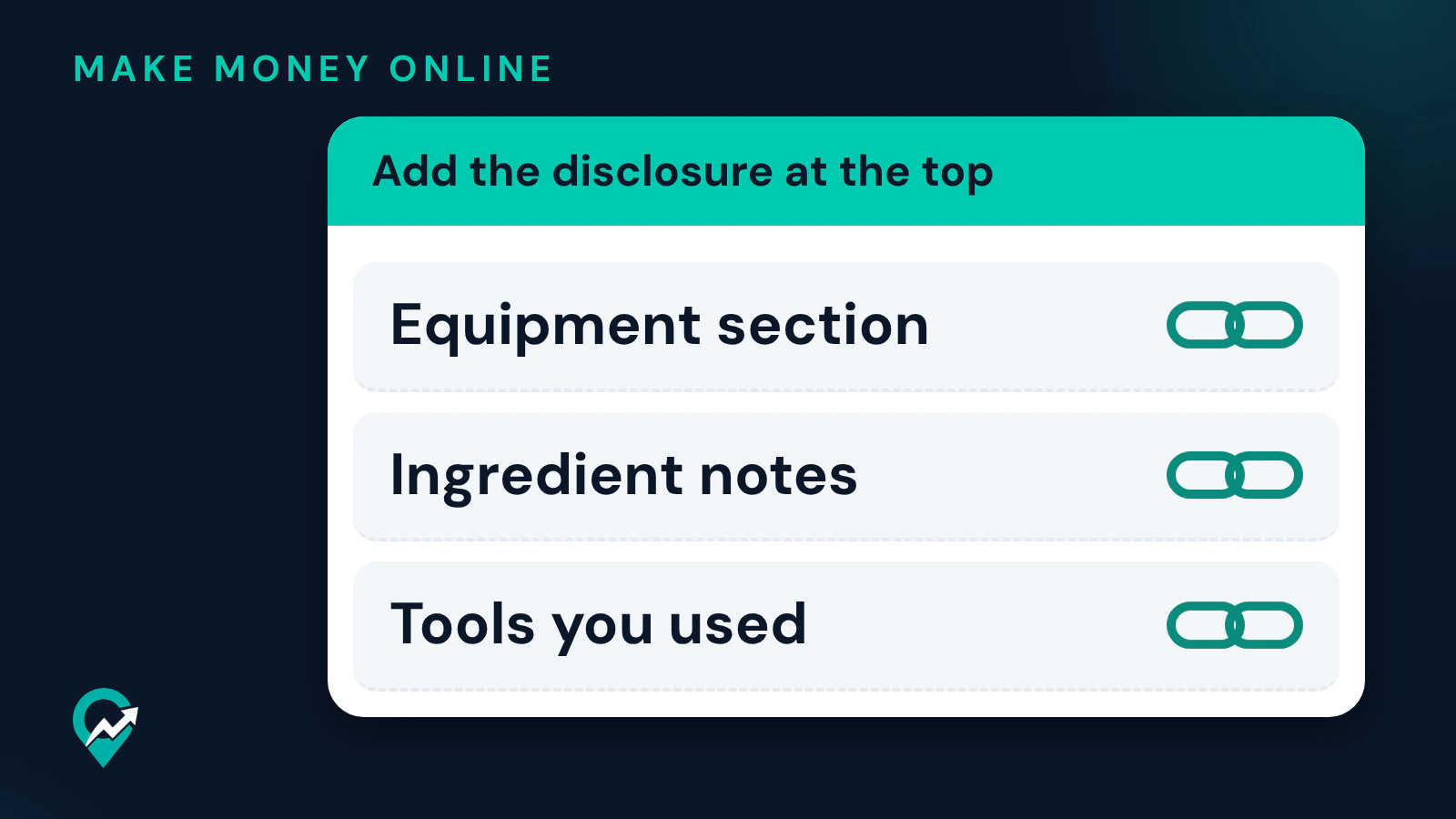
A recipe post has natural places for a link, because each one answers a question the reader has while cooking:
| Place in the post | What to link | Why it helps the reader |
|---|---|---|
| Equipment section | The tools the recipe needs | The reader sees what to have ready |
| Ingredient notes | A specific product the recipe depends on | The reader finds the exact item |
| Tools you used | The items you cooked with for this recipe | The reader can match your result |
Link only what the recipe really uses. A list of twenty gadgets under a recipe that needs a bowl and a whisk reads as an ad, and Google’s spam policies describe pages whose product descriptions are copied from the merchant “without any original content or added value” as thin affiliation.
Programs that suit food content
You can start with one general store and add brands later. The programs below come from the pages read for this guide; our guide to entry rules of affiliate programs for bloggers (opens in a new tab) compares their entry rules in full.
- Amazon Associates: Amazon says millions of products and programs are available on Amazon. It says commission income for qualifying purchases differs by product category, and it reviews an application once you have driven at least three qualified sales within the first 180 days. Our Amazon affiliate guide for Pinterest (opens in a new tab) covers the Pin side of the same program.
- The Etsy Affiliates Program: handmade items your recipes call for, if Etsy sellers offer them. Etsy says the program is designed for bloggers, media and editorial publications, with a 30-day cookie period for affiliates.
- Brands on an affiliate network: kitchenware, grocery or meal brands that run their program on a network. Awin’s page offers an advertiser directory to “Search and connect with brands across every industry,” and says individual brands may have their own requirements.
Adding links to a recipe post, step by step
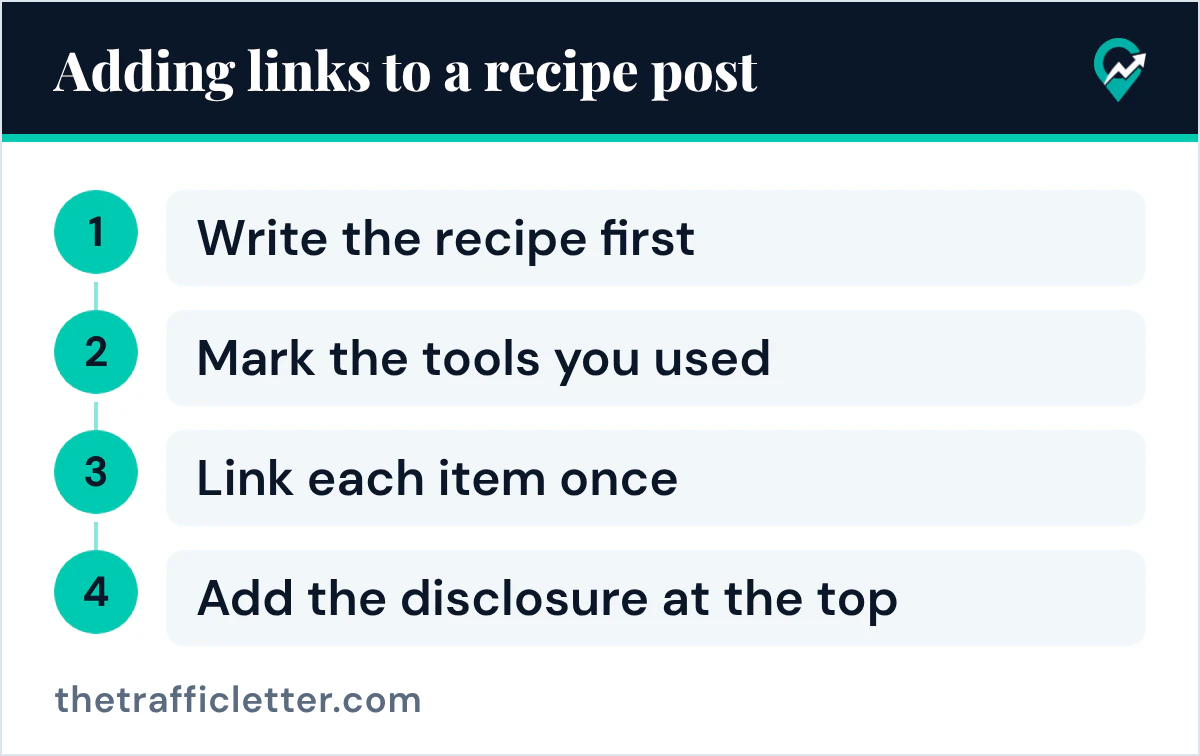
- Write the recipe first. The ingredients, the method and the photos are the content; the links come after.
- Mark the tools you used. Note each item you cooked with for this recipe, and say what it does for the result.
- Link each item once. Put the link where the reader meets the item, in the equipment section or the ingredient notes.
- Add the disclosure at the top. Place it before the first affiliate link, in plain words.
The disclosure in a food post
The FTC’s endorsement guides (16 CFR Part 255) give the example of a blog that reviews coffee makers with affiliate links, and say “the reviews should clearly and conspicuously disclose the compensation.” They define clear and conspicuous as difficult to miss and easily understandable by ordinary consumers. A recipe post with links to the tools you used is close to that example, so put a short line above the recipe, before the first link.
Amazon adds its own line: its Operating Agreement says you must clearly and prominently state “As an Amazon Associate I earn from qualifying purchases” on your site. This is general information, not legal advice: the disclosure rules of your own country apply as well.
Prices, recipe cards and rich Pins
If a kitchen tool roundup shows prices, Amazon’s rules apply. Its program policies say your site may only show prices and availability if Amazon serves the link in which that data is displayed, or if you get the data through its Creators API or PA API and follow their requirements. A price you type by hand from the product page fits neither case, and it goes out of date as the price changes.
The recipe card has a job of its own. Google’s recipe structured data page lists recipeIngredient among the recipe properties, and Pinterest’s rich Pins page says recipe rich Pins add a title, serving size, cook time, ratings, diet preference and a list of ingredients to recipes you save from your site. Keep each ingredient line accurate, as the recipe needs it, and put the affiliate links in the notes and the equipment list around the card. Our guide to rich Pins (opens in a new tab) explains how recipe rich Pins pull that data from your page.
Write about the tools as a cook
Google’s page on writing high quality reviews asks reviewers to provide evidence of their own experience, such as visuals, audio or other links, and to discuss benefits and drawbacks based on their own original research. For a food blogger that evidence comes easily: process photos with the pan you recommend, a note on why the thermometer matters for this recipe, and the drawback you found.
The same page suggests links to multiple sellers, so the reader can buy from the merchant of their choice. Google’s spam policies also describe a case close to food blogging: a news site’s cooking section with affiliate links to grocery stores and cookware, written by an identified author. Google says that because the content is primarily unique and “affiliate links are clearly marked,” it is unlikely it would take action.
Prompts for food affiliate posts
These prompts work in ChatGPT, Claude, Gemini or any AI assistant. Use them for the structure, then add your own notes from cooking the recipe.
Here is my recipe for [recipe name]: [paste ingredients and method]. List the equipment the method really needs, in the order the reader uses it. For each item, write one sentence on what it does in this recipe. Do not add any item the method does not use.Write a 1 or 2 sentence affiliate disclosure for the top of my recipe post about [recipe name] on my [your niche] food blog. The post links to the kitchen tools I used through [program]. Plain, friendly wording, no promises about prices.Right after
- Set up your disclosure and the rel=“sponsored” attribute with our guide to disclosing and marking affiliate links (opens in a new tab).
- Turn on recipe rich Pins for your recipes with our Pinterest rich Pins guide (opens in a new tab).
- Bring more cooks to your recipes with our guide to bringing more readers to a blog (opens in a new tab).